

Myriam, Saad, and Bouchra: Intertwined Destinies between the Chouf and Lourdes
In the heart of Lebanon, where mountains rise between sea and sky, lies a land of beauty and peace: the Chouf. It is in this setting of majestic forests, crystal-clear springs, and ancestral villages that the destinies of several lives intertwine. This story, much more than a simple family tale, is a testimony of love, sacrifice, and deep faith. It tells the journey of Bouchra, a generous and pious woman; Myriam, a young girl raised as a heart daughter; and Saad, a passionate doctor. Three lives bound by affection, separated by fate, and reunited by an unexpected miracle. It is a story of humanity, of difficult choices, of silent fidelity, and of persevering hope, where Providence ultimately accomplishes what men believed impossible.
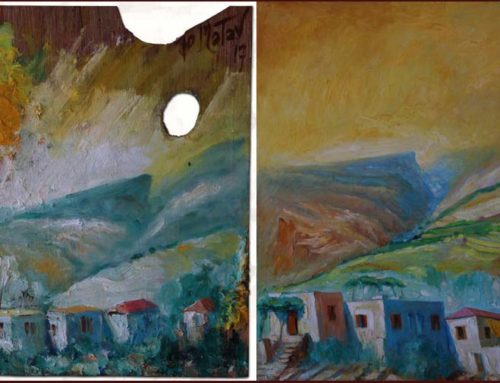
Here we are in Chouf, in the Lebanese mountains, where numerous springs of pure, crystal-clear, drinkable, and fresh water gush forth. It is abundant enough to irrigate agricultural land. Fruit trees of all kinds offer appetizing fruits, to which are added vines, olive trees, carob trees, etc.
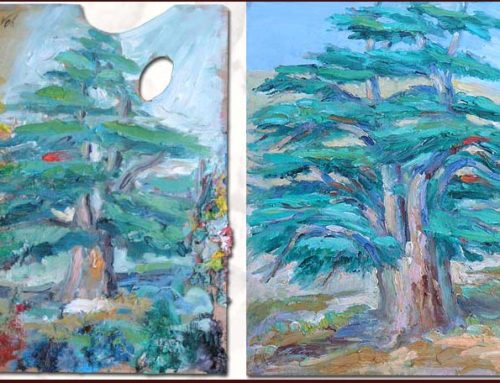
The flora is rich and varied. There are many forest trees: cedars, pines, oaks… A green and generous region, where coexistence between Christians and Muslims is exemplary. The villages are few and often poor, the houses scattered. Nature is clean and healthy, pollution totally absent; it simply did not exist.
At the beginning of the 20th century, we are a Druze family whose father owned a property in Kantari, Beirut, belonging to his wife. He commuted between Beirut and his small village, not far from Baakline. There was one house for wintering and another for the summer. Few people owned multiple residences at the time, as the majority of mountain dwellers stayed at home during the winter. They secured all their provisions before the snow, because once it fell, there was nothing left.
At that time, the obligations of urban life did not yet exist: no compulsory schools, no permanent jobs in companies or institutions. Today, everything has changed with modern education, work, and responsibilities.
At the beginning of the 20th century, there lived a wealthy Druze family. Their father, Walid, was a merchant and trader between Damascus, the port, and Lebanon. His products were mainly cereals, milk, lentils, beans, etc., which he bought in Damascus to resell at retail on the local market. Walid was a man respected by all. He had four sons: Rachid, Fouad, Saleh, and Saad, and a daughter, Mona. His wife’s name was Bouchra.
Bouchra had a sister who converted to Christianity and became a nun in a convent in Jerepta, in the Batroun region, where Saint Rafqa had lived. Conversions have always occurred for various reasons: spiritual conviction, emotional or social situation, disappointment, etc. This does not mean that one religion is better or superior to another.
In Lebanon, and especially among Christians, individual freedom and human rights are respected. Thus, if I, a Maronite, wish to embrace Buddhism, Islam, or even paganism, no one has the right to intervene or judge.
I knew this nun personally. I visited her several times in her convent in Jerepta, especially when I was making sepia illustrations on the life of the illustrious Saint Rafqa. I believe she belonged to the Al-Khatib family. I also knew her sister Bouchra, Walid’s wife. When Walid died, both sisters were already elderly.
Bouchra called me “my dear son” because she was older than my mother. She explained that she often came to this magical place to pray, meditate, rest, and seek peace with her religious sister. “My sons and daughter are abroad or busy with their families and business,” she confided. “Every summer, I spend one or two weeks with my sister at the Saint-Simon Convent in Ayto, in northern Lebanon, not far from the Cedars.”
I knew this place very well, having made several pilgrimages there. Ayto, whose “Corn” is one of the most beautiful peaks, ends in an anvil-shaped rock. Our sacred places, churches, sanctuaries, convents, Harissa, hermitages, are visited by all communities. We pray to the saints there, we ask them for favors, and God often grants these wishes.
I sympathized with this noble lady, Bouchra. She had a lot of charm and elegance despite her age, and possessed a distinguished and communicative personality.
“I am not baptized,” she told me, “but I share my sister’s life. I am a believer. I love the Virgin Mary, Christ, God, the prophets, and the saints. You know, my son, heaven is bigger than the cosmos: there is room for all the good.” She smiled.
Married for over forty years, Bouchra wanted to give her daughter Hanane a religious education and enrolled her in the Holy Family Nuns’ School, a French school in Beirut, where she received an excellent education. Her sons, meanwhile, continued their studies in Lebanese schools, high schools, and Europe. Her husband, now deceased, was generous and very kind.
At the time, there was no foreign labor. One day, Bouchra met an eight-year-old Maronite girl from Mayrouba. She fell in love with her at first sight and decided to adopt her to keep her company. After obtaining the agreement of her parents, to whom she paid a year’s tuition in advance, she enrolled her in school and bought her a complete set of clothes.
This child, Myriam, became like her own daughter. She called her “Mama” and showed her her lessons and homework. Hanane had married and left home, as had the boys. Only Myriam and Saad remained at home.
Myriam grew up and became more and more beautiful, taking care of everything: cooking, sewing, knitting, maintenance. She passed her complementary diploma and prepared for the baccalaureate. Her parents visited her regularly, and sometimes Bouchra would spend a day or two in Mayrouba.
When Myriam’s father asked to take her home, she refused: she wanted to finish her studies and not abandon Bouchra. She would always remain grateful to him.
But Saad and Saleh began to develop feelings for Myriam. She, for her part, had a stronger affection for Saad. Saleh, to seduce her, offered her jewelry, diamonds, necklaces, bracelets… which she refused. Saad, more discreet, declared his love for her and promised to wait for her until the end of her studies, even considering living together in Europe.
To avoid a confrontation between the two brothers, Myriam made a radical decision: to leave. She told Saad that she loved him, that she would leave without leaving a forwarding address, and that one day, Providence willing, they would meet again. She urged him to finish his medical studies and take care of his mother.
Shortly after, Myriam disappeared. She contacted the Vincentian Sisters and, disguised as a nun, left the country for Spain, where she learned the language, entered university, and continued her studies as a nurse and operating room assistant.
Six years passed. Saleh married, while Saad, now a renowned surgeon, moved with his mother to Paris. Bouchra suffered from the absence of Myriam, who also often thought of them.
Eventually, Myriam returned to Paris, where she worked for the Red Cross. She no longer thought she would return to Lebanon, but still hoped to see Saad and Bouchra again. The three of them often frequented the same places, including Notre-Dame de Paris, without ever crossing paths. They posted ads and left messages, but without success.
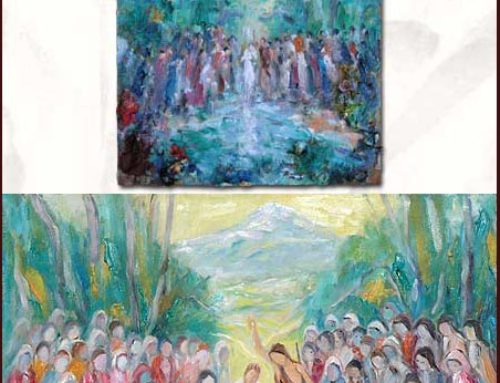
On March 25, the feast of the Annunciation « Bchara », Myriam decided to go to Lourdes. While she was praying, a man had an epileptic seizure. Myriam immediately intervened to treat him. A doctor approached to help her… and she recognized his voice. It was Saad.
Their reunion was overwhelming. Bouchra arrived shortly after, in tears. “It’s thanks to the Virgin,” Myriam said. “She’s the one who brought us together.”
A few days later, Saad and Myriam were married in Lourdes. Back in Paris, they prepared their return to Lebanon, where Saad would practice medicine. Myriam wrote to her parents and siblings, sharing the good news.
A few weeks later, they embarked in Marseille. The journey lasted six days, following the Italian coast, passing through Alexandria and Port Said, before reaching Beirut. Upon their arrival, the entire family was waiting for them. Receptions were held in Kantari and Mayrouba.
Since her return, Bouchra often visited her sister in Jerepta, sometimes accompanied by Myriam. They constantly thanked the Virgin for this miracle: the one that, against all odds, had united three separate destinies.
From the serenity of the Chouf to the miracles of Lourdes, this story is the story of a destiny that neither time, nor distance, nor trials could break. Myriam, Saad, and Bouchra have endured love and absence, doubts and sacrifices, to finally find each other where faith and hope meet. Their story reminds us that the deepest bonds survive separation, that the most sincere prayers are ultimately answered, and that life always holds unexpected miracles around the corner.
It is an ode to unconditional love, to the strength of the human heart, and to the invisible hand of Providence that sometimes guides us towards those we are destined to meet again.
Joseph Matar
All rights reserved © LebanonArt